Brown’s work fell from favour soon after his death (1783), dismissed as dull and insipid as the new fashion for the Picturesque embraced rocky crags, blasted trees and rushing torrents. He was largely ignored by the plant-hungry Victorians, and really only rehabilitated in the 1950s. Today, his preoccupations seem remarkably like our own – sustainable water use, planting trees for future generations, finding less labour-intensive ways of gardening. Brown had made a virtue of simplicity, but in the eyes of his critics this was a failure. His designs were considered insufficiently painterly (although J. M. W. Turner painted eagerly at Petworth), with too little evidence of the hand of man. Today, perhaps, we have a better appreciation of the art that conceals art, and the subriety required in its making.
Text from The Story of the English Garden – Ambra Edwards/HarperCollins
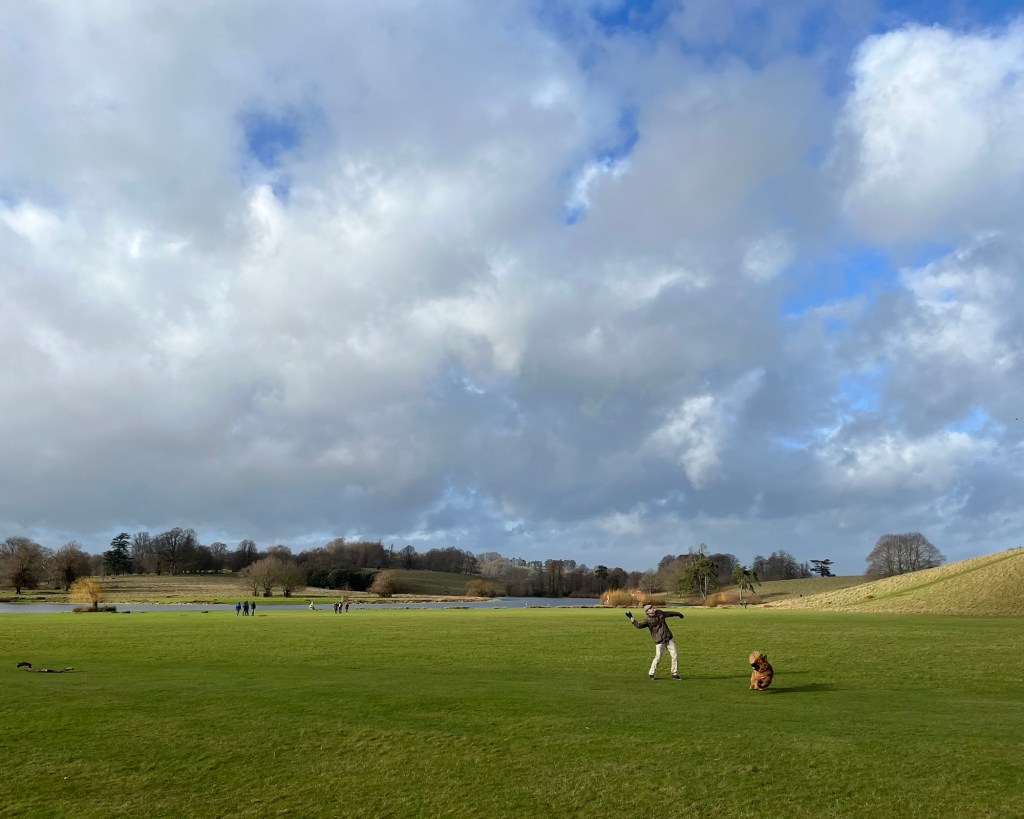
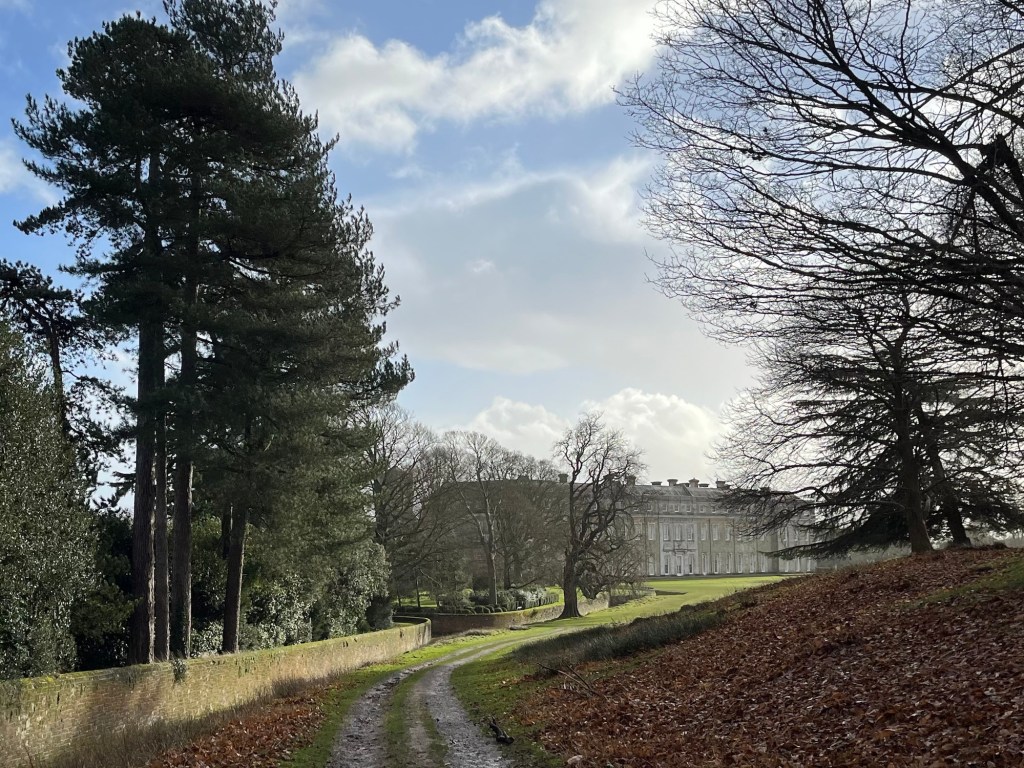
Photos – top, view from the house across the parkland and lake. Bottom, view along the Ha-ha (wall and ditch) toward the house. Petworth 31/12/23