The black fruits of Fatsia japonica seen here in April, having ripened over winter from the previous autumn’s flowering. Fatsia japonica is in the same family (Araliaceae) as English Ivy, Hedera helix, the fruits in particular share remarkable similarity.
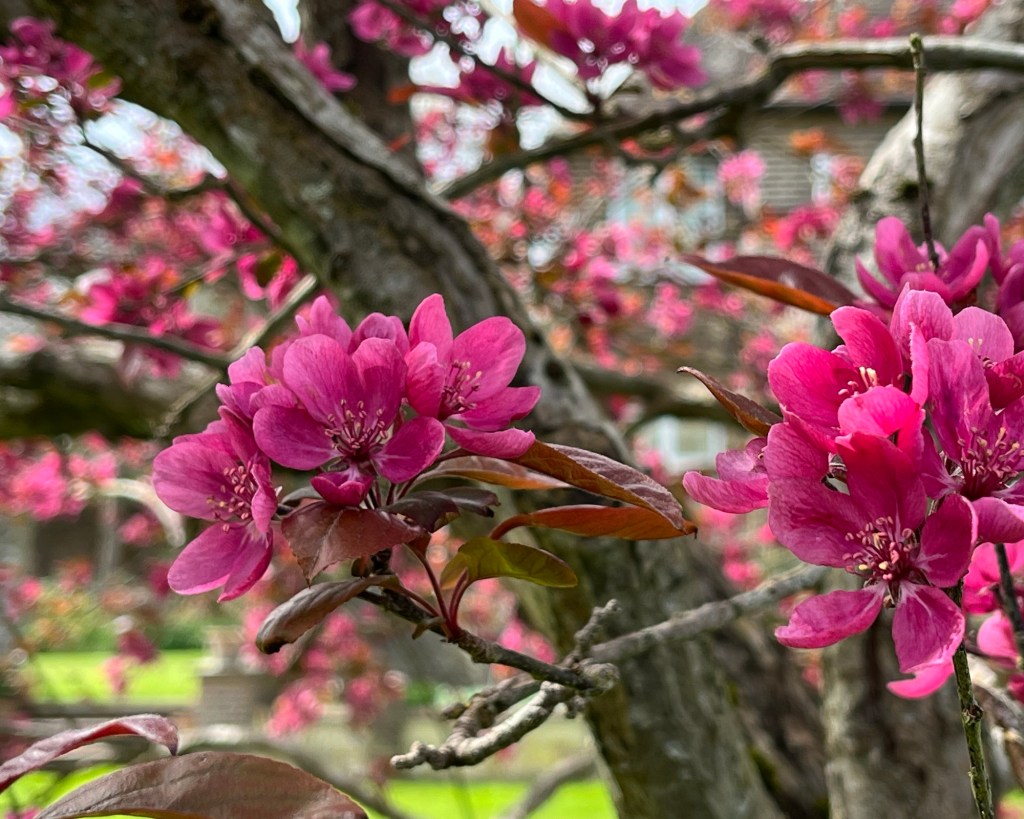
Crab Apples are great for long season interest, meaning they draw attention throughout the year with their flowering, fruiting, autumn colour and winter stems. Malus ‘Prairefire’ is one such cultivar, deep pink spring flowers, dark red green foliage spring and summer, small dark crab apples and autumn colour as the summer slips away and in winter steel blue young stems. Not a vigorous tree by any means and representative of RHS pruning group 1 (trees), those trees that need little or no pruning, moderate in size and growth and generally best left alone. Ideal for most gardens and gardeners.
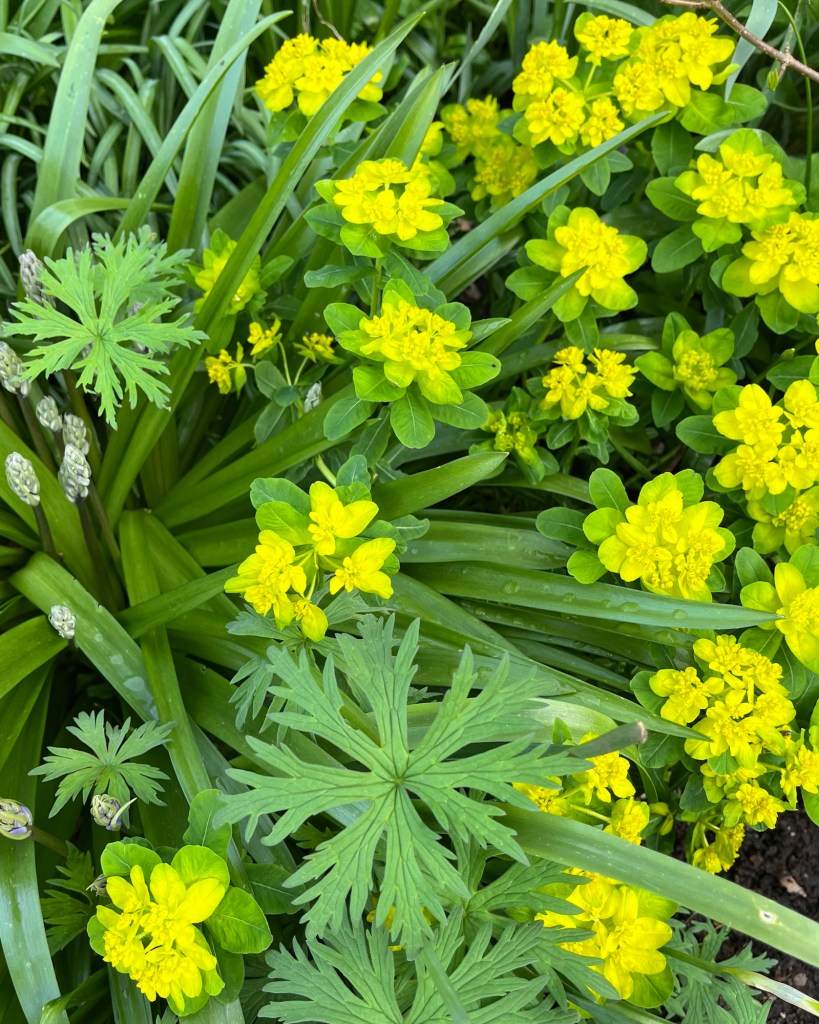
A clump forming herbaceous Euphorbia that begins flowering in early April, rivalling the daffodils close by. Capable of good autumn colour under the right conditions. A good candidate for lift and divide treatment. Formerly known as Euphorbia polychroma to which it is still sometimes referred.
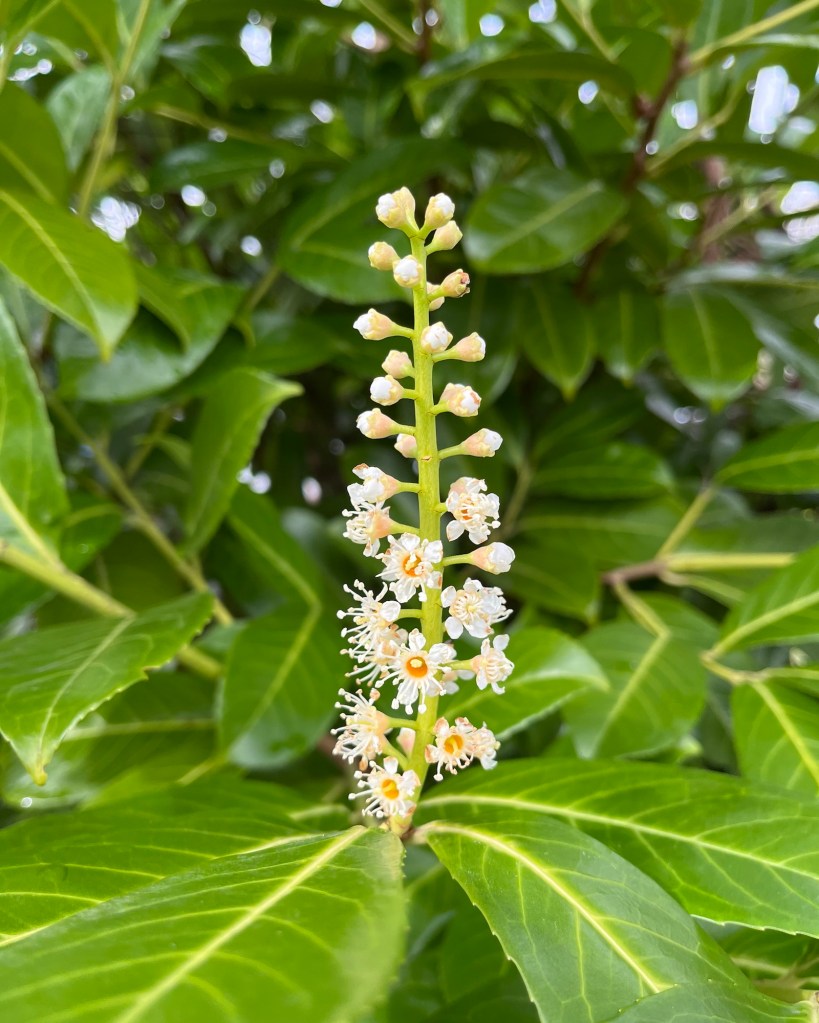
Frequently seen, very robust and suitably vigorous, if you’re looking to establish an evergreen boundary hedge as quickly as possible. Intriguing racemes in spring followed by red berries turning black in autumn. The foliage has a nice quality and a vibrant green colour. Naturalised but not native. Potentially invasive given its robust character.
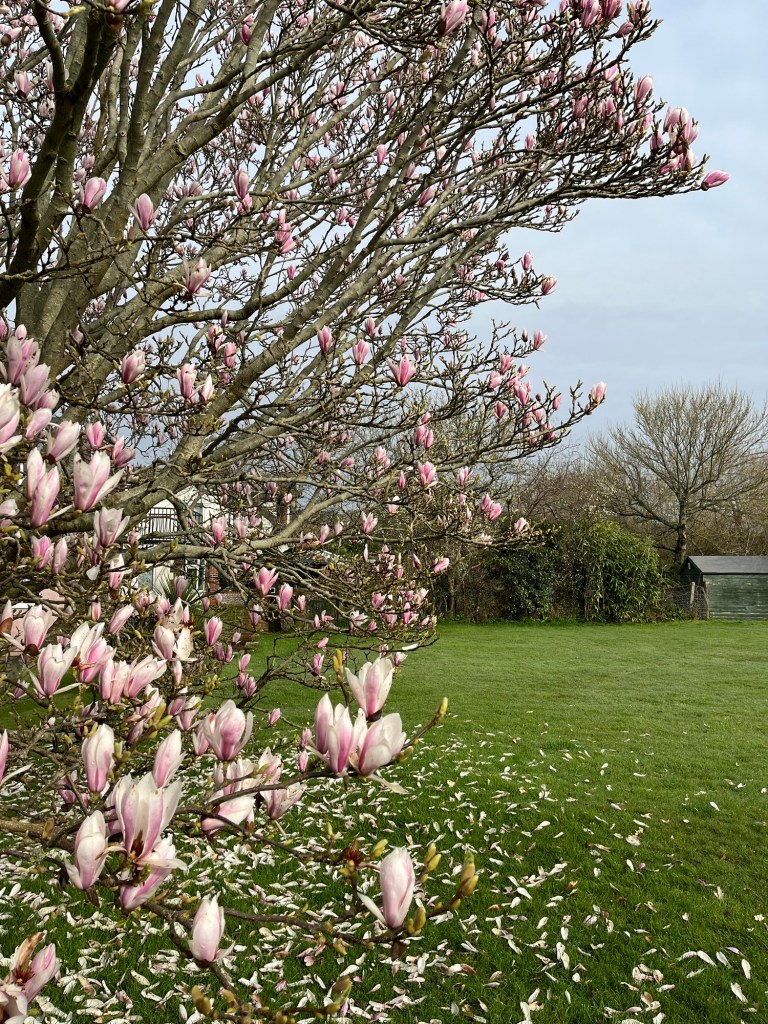
On a 5 minute journey recently I counted 14 front garden specimens in bloom, which to me confirms its status as the mostly commonly planted of the Magnolias here in the south east (UK). Magnolia x soulangeana is a hybrid magnolia brought into being in 1820 by French plantsman Étienne Soulange-Bodin (1774-1846). He crossed M. liliiflora of Chinese origin with M. denudata of Japanese origin (although actually also a Chinese native) and the rest is history, flowering each March to spectacular effect.
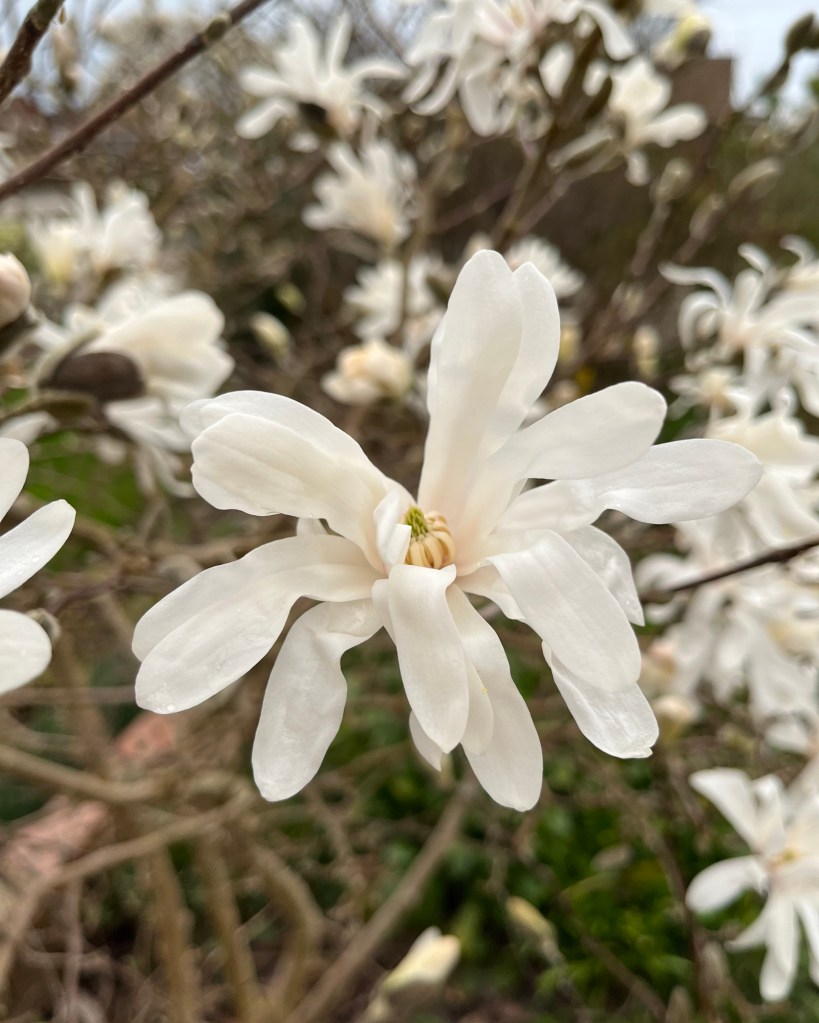
Magnolia stellata is a species in the family Magnolinaceae. The genus Magnolia evolved during the Cretaceous period and contains species of tree and shrub that have large flowers pollinated by beetles. At this point bees were yet to evolve and this goes some way to explaining their flower size and pollination process, which you can research if interested. Magnolias begin flowering in March with different species flowering through the warmer months. Magnolia stellata is a deciduous shrubby magnolia that flowers in March prior to leaf break, white flowers are born on bare stems to dramatic effect.
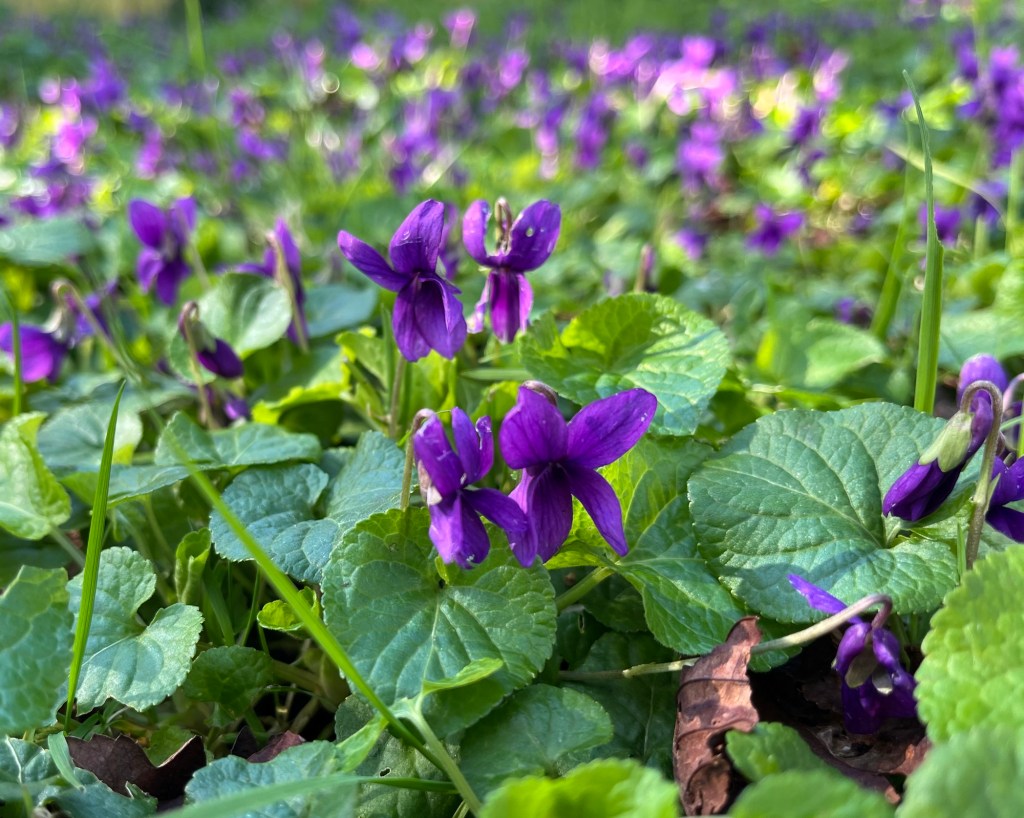
In the park down the road, on a grassy bank, under the shade of a large Horse Chestnut (Aesculus hippocastanum), a community of Viola riviniana, the right plant in the right place.
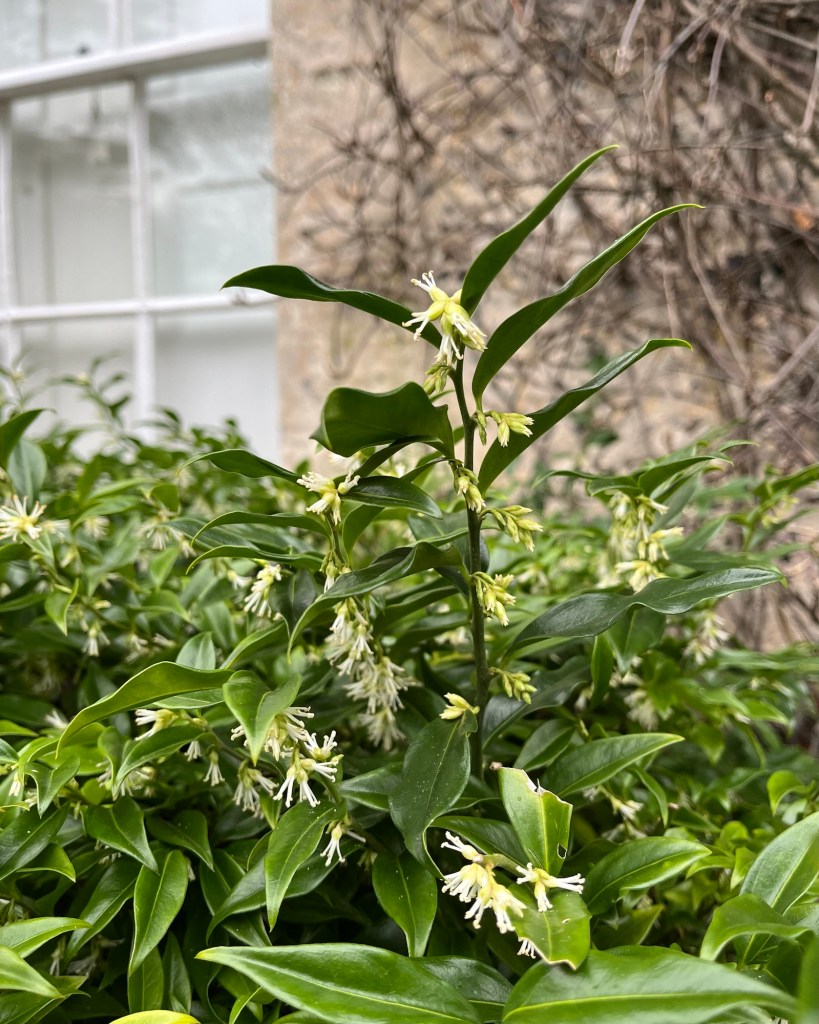
Evergreen winter flowering fragrant shrub ideally placed somewhere near the front door in partial shade so as to appreciate the fragrance as you come and go in January/February. Native to China and a member of the Box family, Buxaceae.
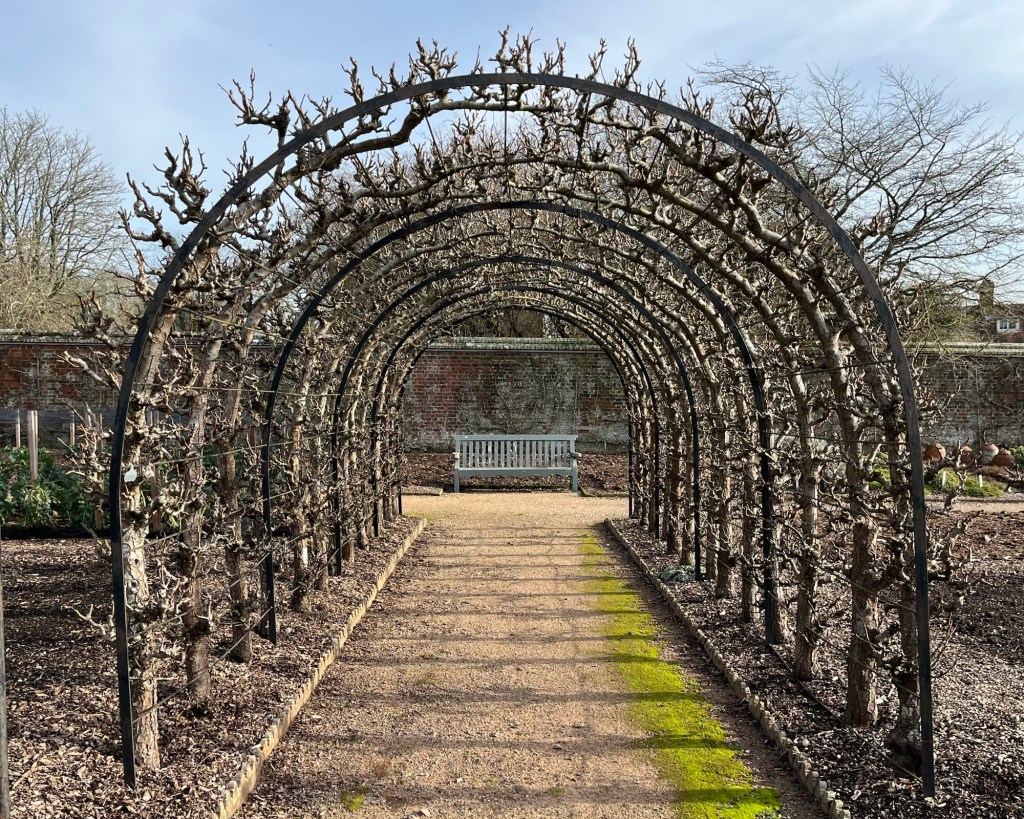
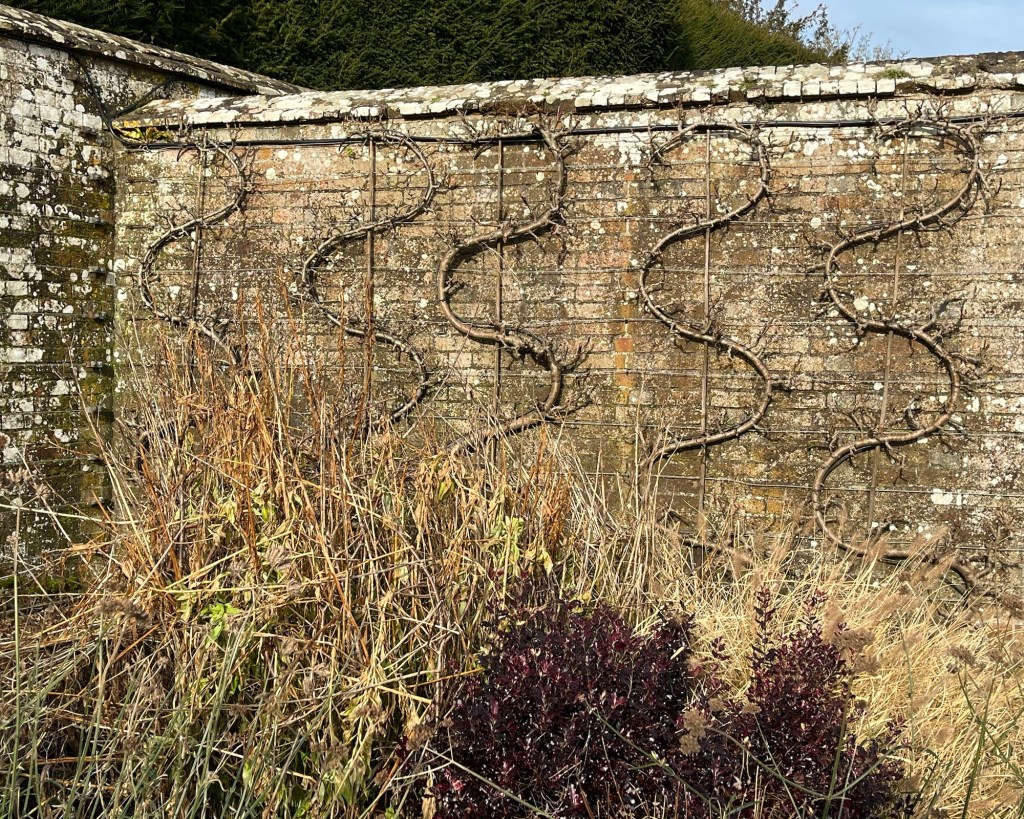
The Walled Garden at West Dean is a special type of timeless garden. Perhaps something to do with the imposing and solid boundary walls, the permanence a complete boundary suggests and the Edenic atmosphere of such a well tended fruit garden.
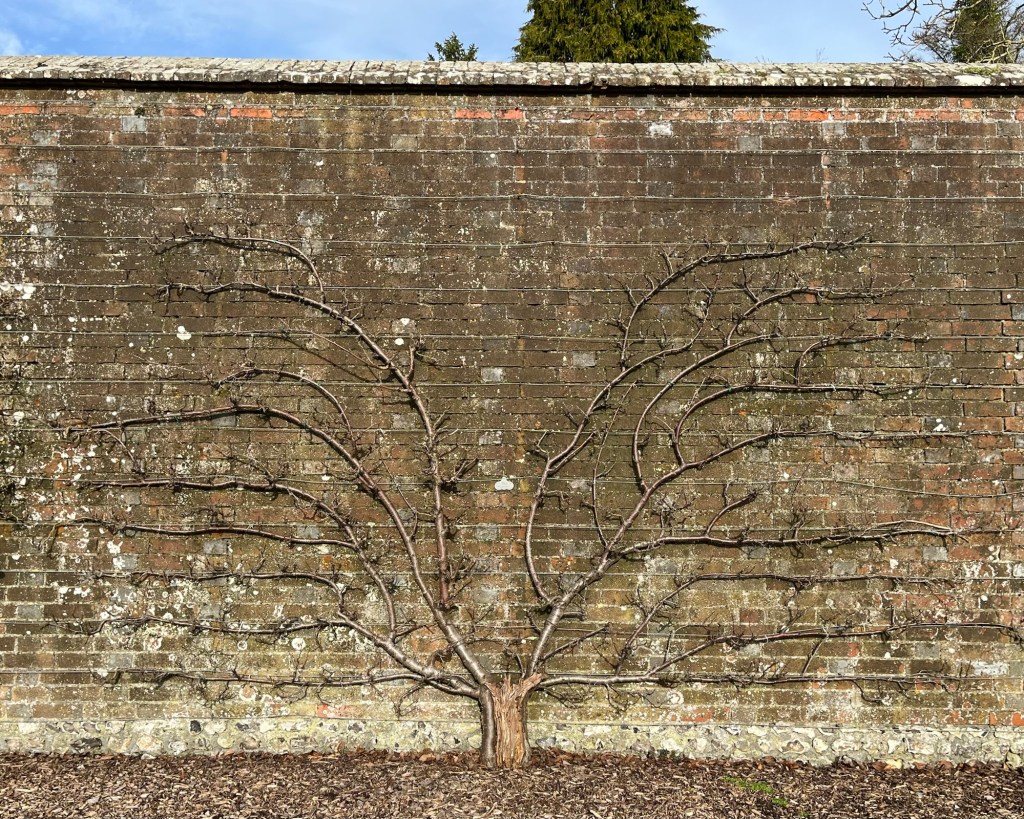
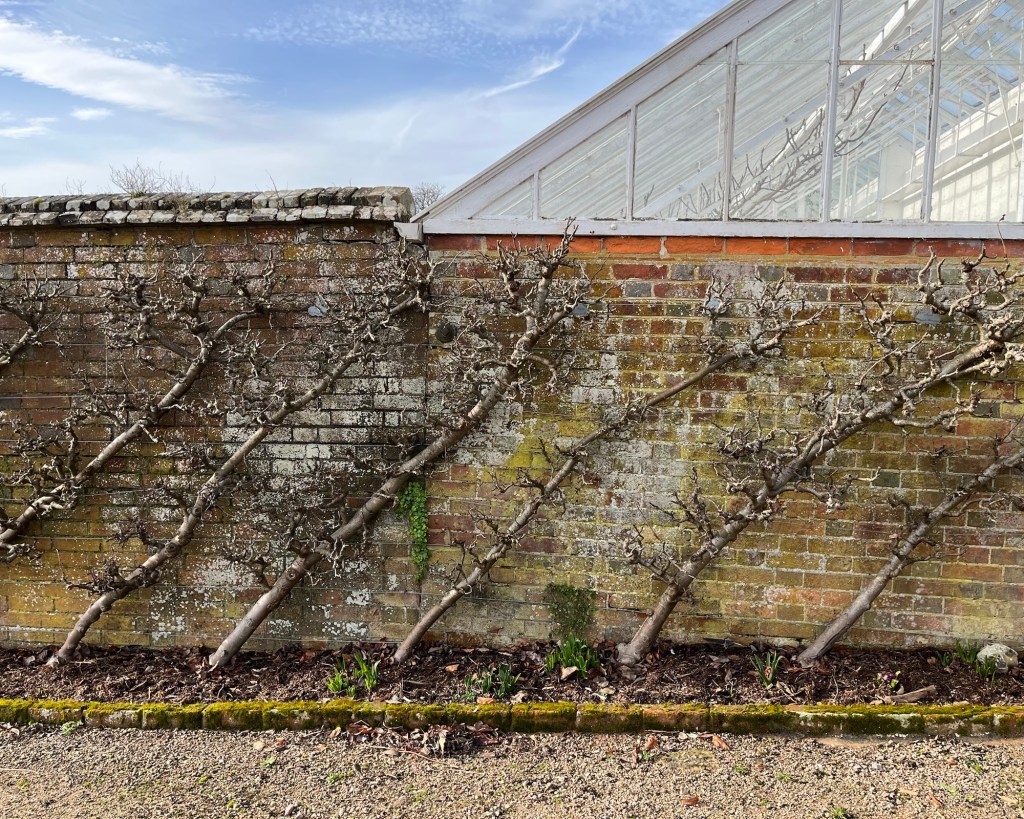
The garden is laid out in three distinct walled sections; The Walled Fruit Garden, The Victorian Glasshouses and The Kitchen Garden. The trees pictured above are relatively young, not older than the post 1987 storm restoration project undertaken by the former head gardeners Jim Buckland and wife Sarah Wain (between 1991-2019).
I believe the term hortus conclusus is apt. The enclosed garden can be considered a paradox – bringing a controlled nature within whilst establishing a vertical axis as it eliminates the outside world, the garden below and the heavens above. With its inward focus it becomes symbolic of seclusion and strength, a heavenly paradise, Eden itself.
The trees in question pictured above, Apple (Malus), Pear (Pyrus) and Plum (Prunus), take to training in these restricted forms very well and are relatively quick to establish. West Dean exhibits some text book styles (fans, cordons etc) but also experiments with more expressive and creative forms, just for fun maybe or perhaps to deliberately provoke. More likely the garden’s creators understand that such a garden is infused with metaphorical meaning, of nature perfected through human creativity in the service of an ideal.
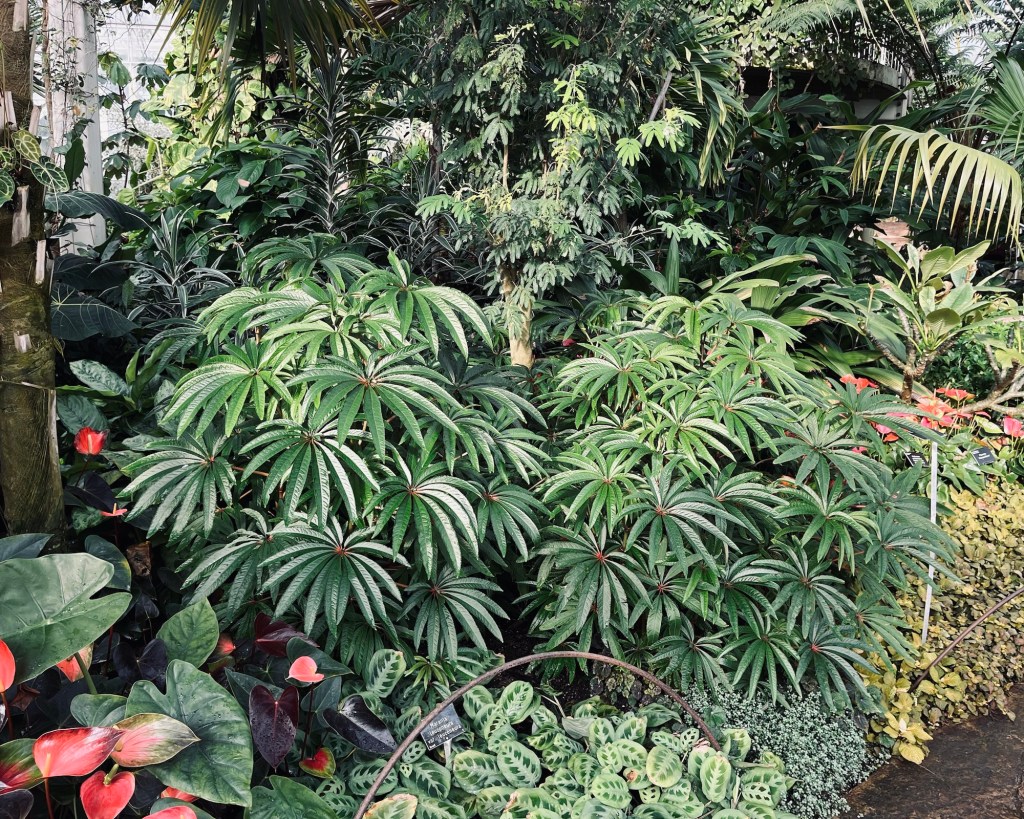
The begonias are a diverse group and Begonia luxurians illustrates that well, not really meeting your expectations of what a begonia should be. Instead, at first glance, it’s looking more like some kind of shrubby palm – the usual give away, the asymmetrical leaf, not nearly so obvious. Seen here enjoying the Tropical Zone of the glasshouse at RHS Wisley in Surrey to which it is perfectly suited.




 Tend&Grow