In my context (southern UK) winter work is so important if you want to stay on the front foot with your garden or allotment plot. This is the time when nature’s pace slows, I won’t say when nature sleeps as is the popular imagination for there is always movement, and so time for the gardener to take advantage and get ahead. If there is a gardener’s time to slow (in the UK at least) it’s in September when things are at their peak and the seasons are beginning to switch with the autumn and winter ahead. As for the gardener’s time to sleep, well I’m not sure there is one. But in February, despite the unappealing weather, I aim to be as busy as possible with garden tasks. This includes the tidying tasks (greenhouse, shed, pot store) and layout updates (new patio area, dressing paths, relocating plants). I tidy away some of the browns that haven’t aged so well and that are obscuring emerging greens, even as the act of this type of tidying has become stigmatised, although perhaps for good reason (respecting natures cycles, understanding biodiversity, redefining acceptable aesthetics). I realise again in my (local) travels I’ve collected too many plants that are now hanging around in pots (which creates work) and vow to limit this acquire first think second approach I’ve been impulsively taking up to this point. If you love plants for their variety, as I do, then pretty much all plants have an appeal and can bring joy making it hard to say no to the slip towards chaos. Thankfully the chaos doesn’t feel good and provides the check I need (again). But what does feel good is giving away plants to people who express interest or as conversation presents opportunity. In my own experience of this, gifted plants can acquire a special type of value and meaning which becomes part of the garden as it evolves.
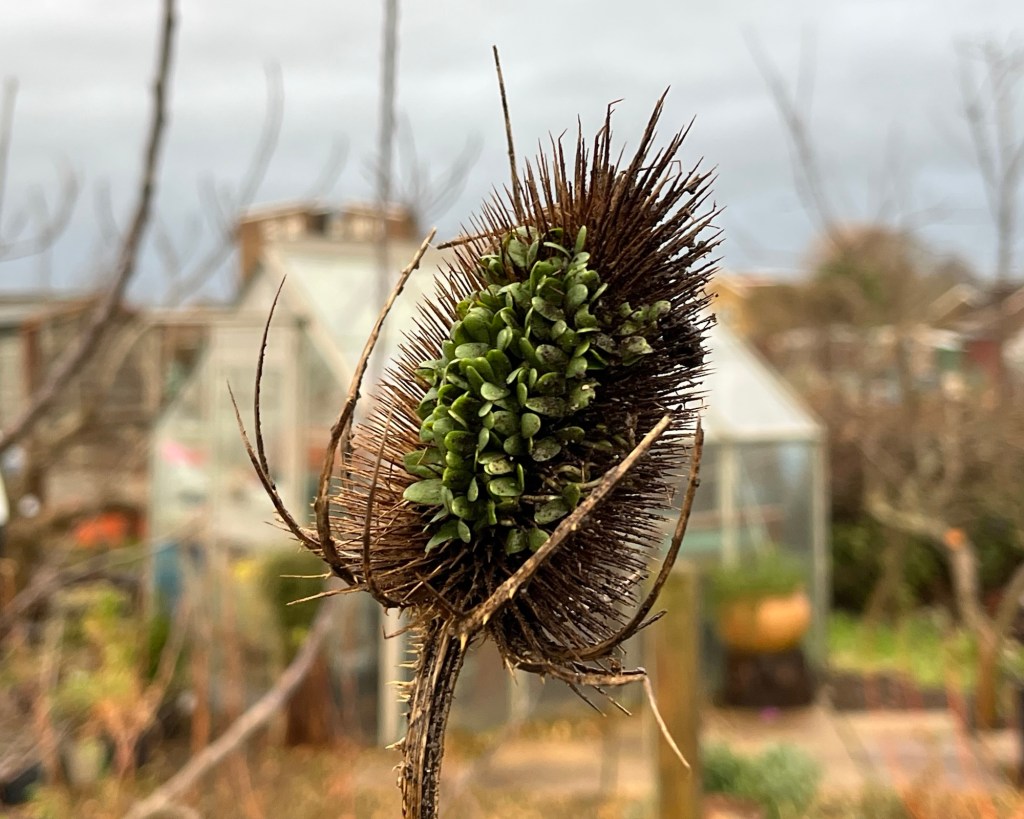
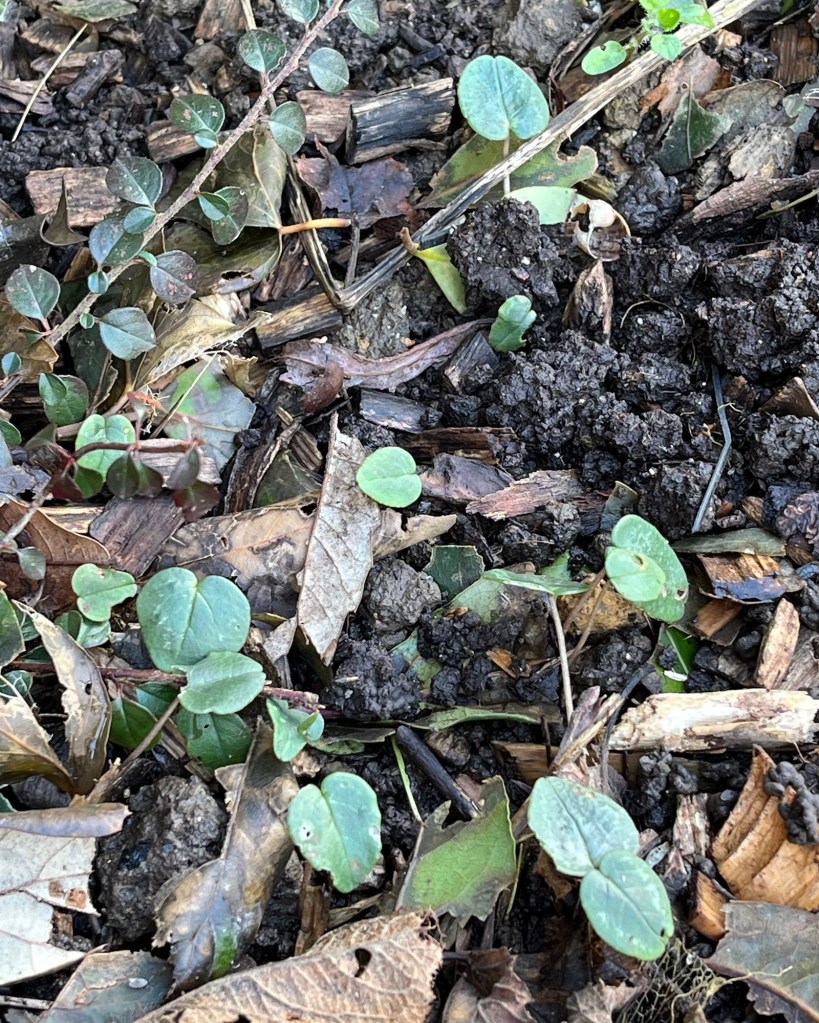
On the whole it’s been pretty mild as Februarys go, I see Dipsacus fullonum (Teasel) seeds germinating whilst still inside the seed heads suggesting mild damp conditions have been persistent. There’s also noticeable progress through the month as crocus, primula and daffodil bring in colour. Like January, February can be bleak, the garden can look like it’s been gutted, but the likes Euphorbia characias wulfenii and its plant partner Umbilicus rupestris are looking particularly good individually and together (see photo) all month as they prepare to flower in early spring. February also seems to be when seedlings of Cyclamen hederifolium show themselves and I’m pleased to see them starting to move about the place.
I added a few perennial plants here and there, some autumn flowering asters, a cerise geranium Geranium psilostemon, the long flowering and semi evergreen Geum coccineum ‘Queen of Orange’ and Phlomis russeliana to accompany an existing Pennisetum grass. Two years ago I sowed seed of Hippophea rhamniodes (Sea buckthorn, a remarkable deciduous shrub) after reading about its array of medicinal and nutritional credentials. The plants grew well but the area in which I wanted to plant several of them together, as male and female plants are needed to get a good crop of nutrient rich berries, was in use for something else (‘storing’ a pile of scrap wood). But with that now cleared I was able to plant out six plants with the hope that they will grow up quickly and bear fruit. Alarmingly I discovered that it’s listed on Schedule 9 of the UK Wildlife and Countryside Act as an invasive non-native species, it being an offence to plant or cause it to grow in the wild. With my allotment plot being one of 400 in the heart of the large town I live in hopefully the chances of an escape are minimal. But if a bird should swallow a berry and relieve itself somewhere distant and rural could an invasion have begun? Am I being irresponsible?

 Tend&Grow