So, an ominous start to the year. January 1st brought a wind chill of -2 degrees c, rain and total cloud cover, very much conditions that are prohibitive to getting outside and tending to the garden as the first indulgence of 2025. In learnt positivity and because expectation is the mother of all disappointment, I saw it as an opportunity to stay put and refine what I have on paper, to indulge thinking about the garden instead. After all it’s fitting with the time of year, to both reflect and project. My hopes for the year? How and when I’ll find the time? Things to do differently? The sowing schedule, the seed list, that kind of thing. That’s if I don’t get distracted by other more necessary things, as is the danger with being at home. Planning it turns out is a real time saver. And if you’re time poor like I am planning is an investment, but this is all sounding very sensible and joyless, you get the idea.
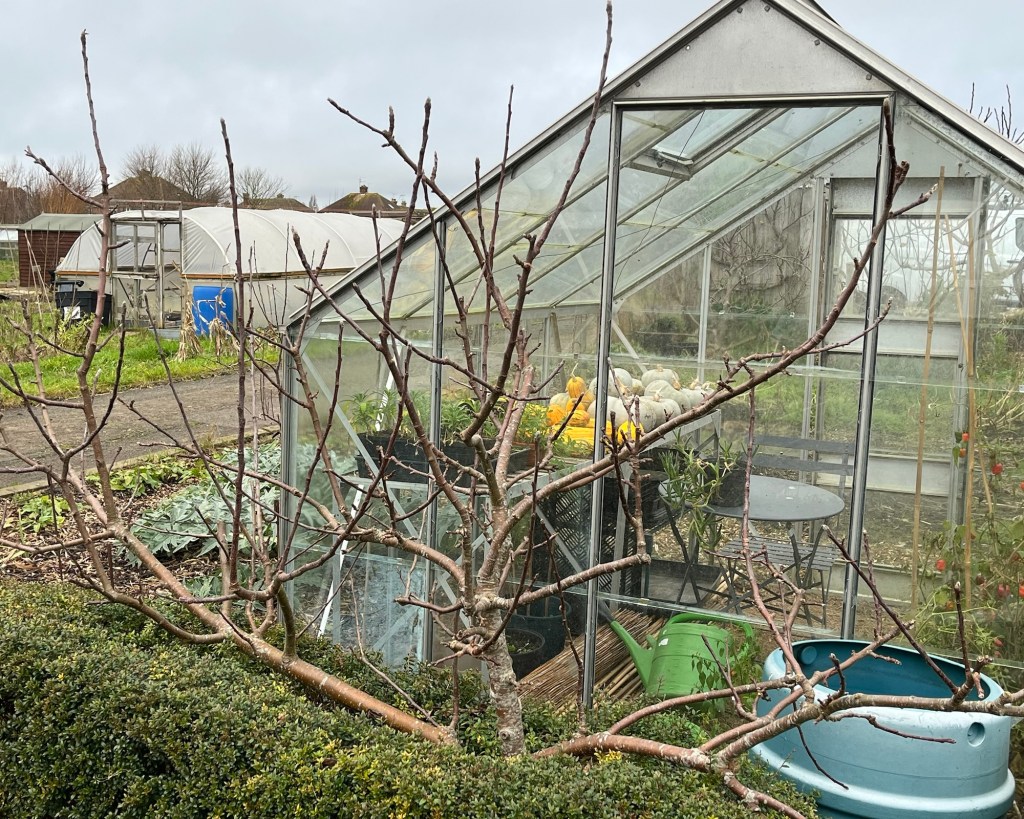
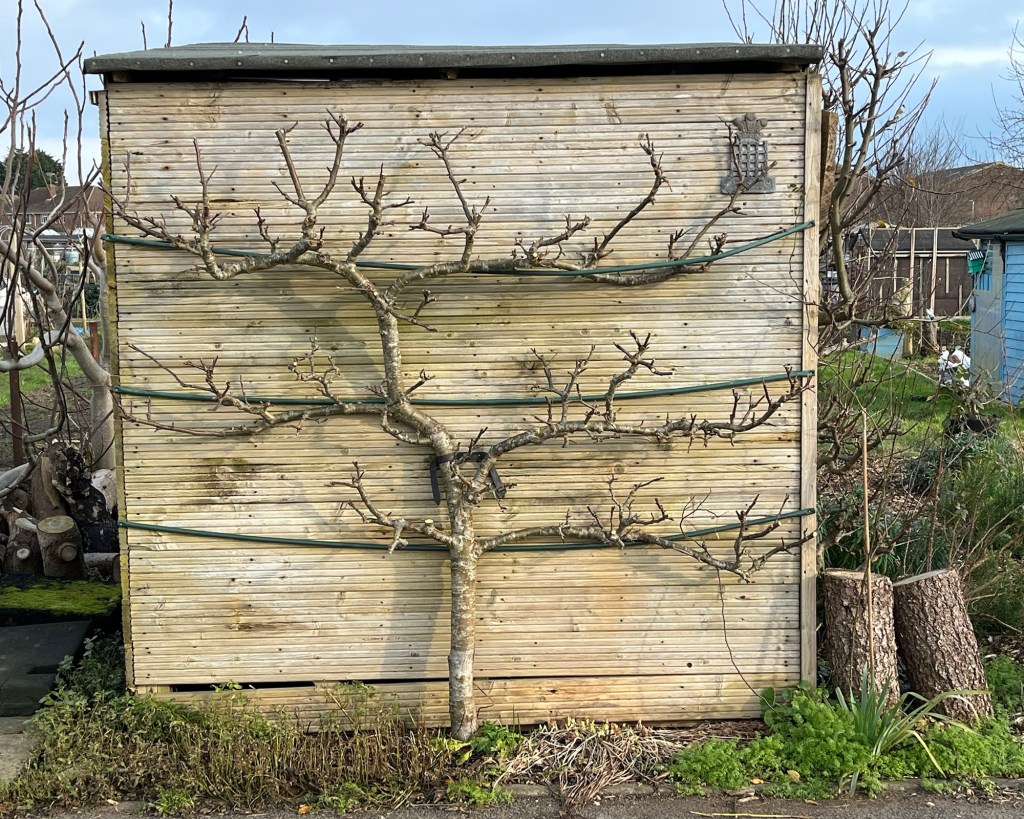
One of the most enjoyable tasks of the month is pruning the apple trees. There are 10 small trees on the plot, planted around the perimeter and on the south and west sides of the shed. They are all pruned into what would most closely resemble an espalier shape, so as to form a barrier and to reduce their space requirements. I say resemble an espalier as the principle is the same but aesthetically they are more relaxed or informal, somewhere between espalier and fan. This I’ve done deliberately, rightly or wrongly although to look at the trees it might appear as an espalier or fan has been attempted but not achieved. Traditionally formed espalier fruit trees are certainly impressive and practically sensible if a little regimented, so given the rustic make do and mend/reuse and recycle cottage garden ethic I’ve opted for a pruning style that is more relaxed and informal and not one that shouts text book technique. The general pruning principle is the same – heading back and thinning cuts, selecting growth that develops, over growth that detracts from, the desired shape. Heading back refers to reducing the previous seasons growth down to only a few buds, with the aim of developing fruit buds. Thinning cuts are older growth removed for structural reasons, to allow for renewed growth or perhaps to remove the weak or damaged. But, this is not a how to of apple pruning and I’m no expert, however it is certainly rewarding to see young fruit trees develop and to play a part in that.
The particular appeal of gardening, to me at least, and I assume to others also, is that you’re working with something that’s alive. This ongoing endeavour that’s unpredictable and ever changing, where for every action there’s a reaction, at first mysterious but with time and experience becoming knowable and increasingly malleable, the shape of your vision appearing, but slightly differently to how you’d imagined. A microcosm to the macrocosm. With the world outside of the garden too full of darkness and despair, there are those that instinctively seek and find that which balances, to think or write about ideas of refuge and sanctuary in this respect would be more than just hyperbolic rhetoric.
 Tend&Grow